
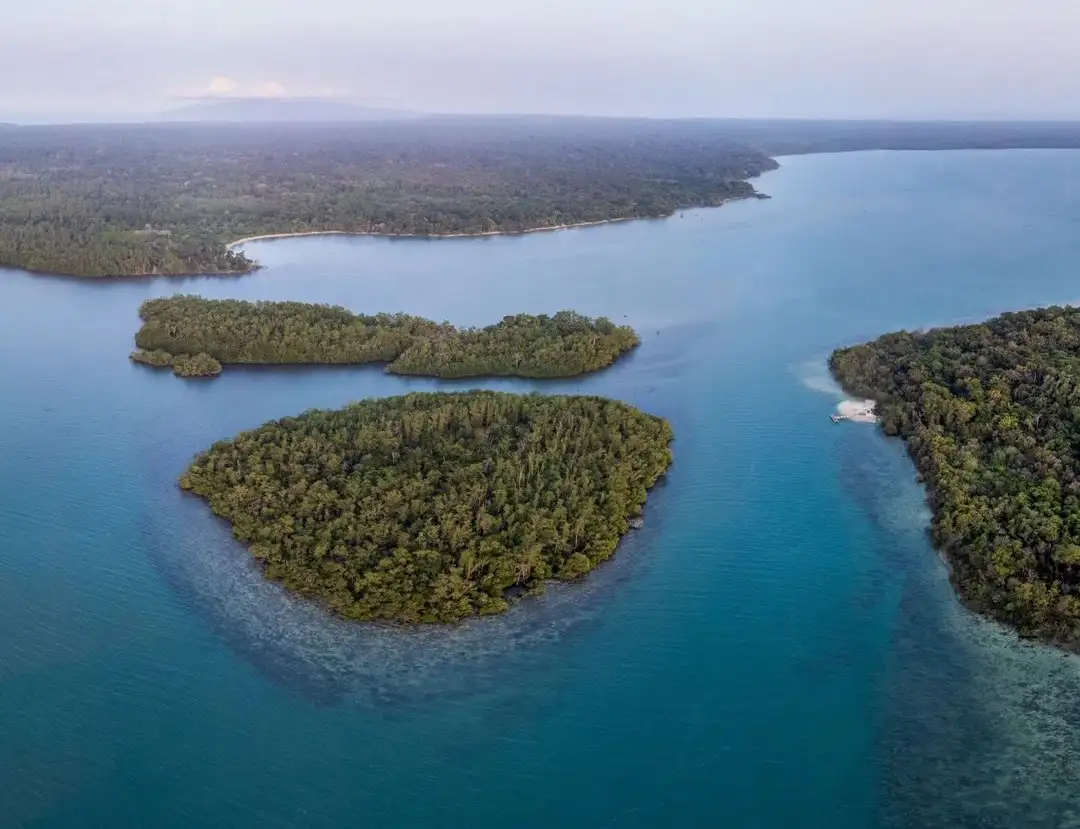
Handeuleum Island is situated among several small islands at the northeastern tip of the Ujung Kulon Peninsula coast. It is one of the islands within the Ujung Kulon National Park area. Handeuleum Island is also recognized as a UNESCO World Heritage Site, along with Panaitan Island and Peucang Island.
Temporary Closed
Based on Announcement Letter No: 327/ /T.12/TU-2/KSA.04.01/B/10/2025 issued by the Ujung Kulon National Park Office on October 29, 2025, Handeuleum Island and its surrounding areas will be temporarily closed from October 30, 2025 until further notice.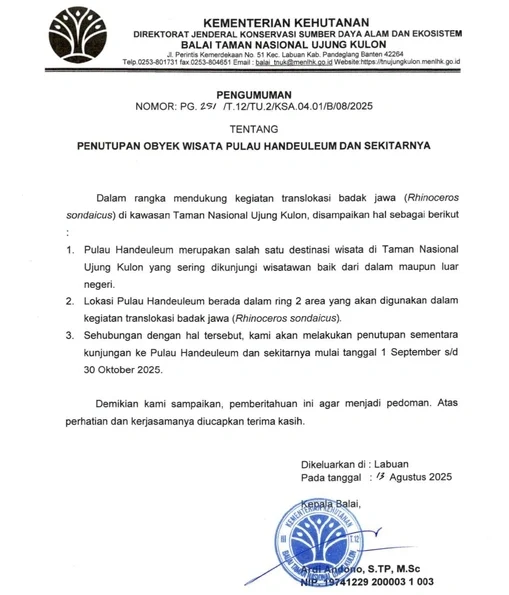
Facts about Handeuleum Island
Handeuleum Island is the largest island among a cluster of small islands in the ‘Selamat Datang Banten’ Bay, to the northeast of the Ujung Kulon Peninsula coast, such as Reungit Island, Boboko Island, Kalong Island, Small Handeuleum Island, and several other small coral clusters.
| Geo Name ID | 1643457 |
| Geo Name : | Pulau Handeuleum |
| Coordinate | 6°45’5.962″S, 105°25’19.582″E |
| Size | 220 hectars |
| Accommodation | Not Available |
Vegetation
This area is thus referred to as the Handeuleum Archipelago. Handeuleum Island itself covers an area of approximately 220 hectares and is surrounded by enchanting mangrove forests. The Handeuleum Archipelago represents the largest mangrove forest zone among the other zones in Ujung Kulon.

The most common types of mangroves found are padi-padi (Lumnitzera racemosa), api-api (Avicennia spp.), bakau-bakau (Rhizophora spp.), bogem (Sonneratia alba), and pedada (Bruguiera spp.). Occasionally, there are also sightings of Nypa fruticans and seagrass (Acrostichum aureum) at the brackish river mouths. Vast mangrove forests are present along a wide stretch on the northern side of the hilly land, extending northwards along the coast to the Cikalong and Legon Lentah rivers on Panaitan Island.
To the northwest of this island and on the two small islands south of Handeuleum Island, there are smaller patches of nipah palm swamps. Similar swamps can also be found at the mouths of the Cijungkulon and Cigenter rivers on the northern coast of the Ujung Kulon Peninsula.
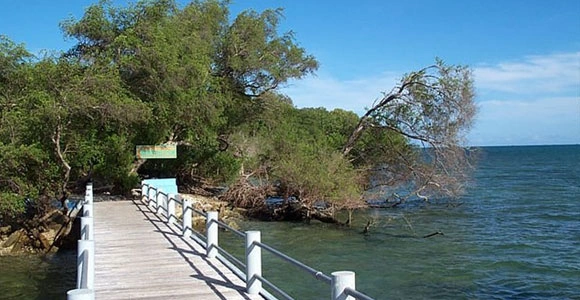
As nearly all the islands in the Handeuleum Archipelago are covered with mangrove trees and small rivers, aside from mangrove trees, another easily found tree type is the nipah palm.
Here we can easily find wildlife includes Rusa, (Timorensis deer), Peacock, Long Tail Macaca, Monitor Lizard and various other wild animals.
Attractions
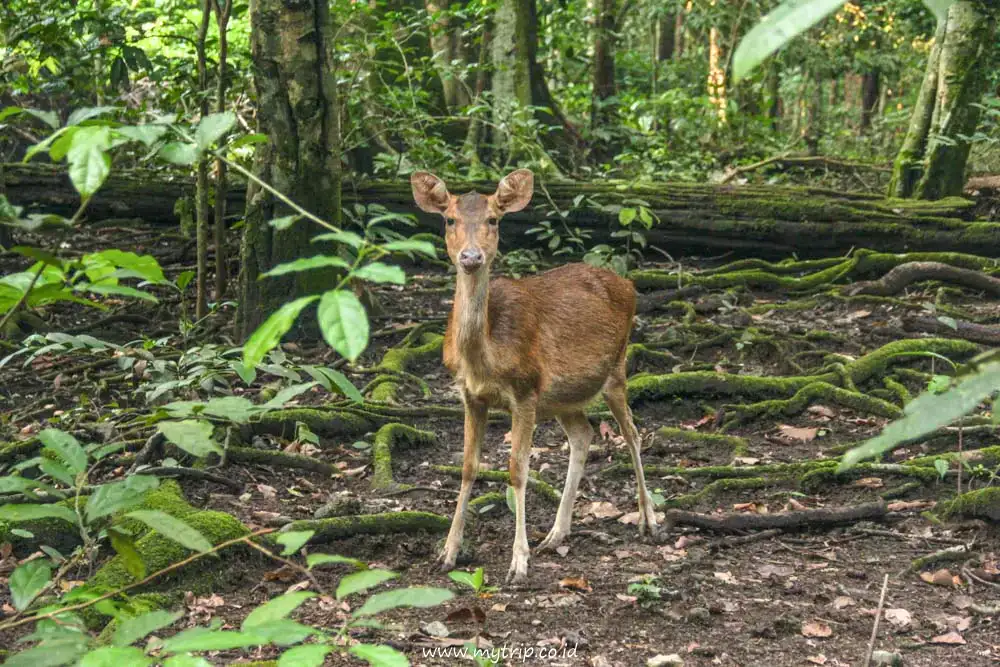
Handeuleum Island is a richly diverse mangrove species island. On this tiny island, there are tranquil locations that offer journeys through rivers to enjoy various types of forests, wild animal species, and marshy areas.
Tourist activities on this little can be enjoyed amidst the mangrove forest, with the chirping of birds adding to its beauty and naturalness.