Indonesia Launches Biobank Program to Save Critically Endangered Javan Rhino Through IVF Technology. In a groundbreaking conservation initiative, Indonesia will begin preserving sperm and eggs of the critically endangered Javan rhinoceros in a biobank to support future breeding efforts using Assisted Reproductive Technologies (ART) such as In-Vitro Fertilization (IVF). The announcement was made by Forestry Minister Raja Juli Antoni on Friday.
Biobank to Support Javan Rhino Conservation
Speaking at Gadjah Mada University’s Faculty of Forestry in Yogyakarta, Minister Raja Juli Antoni said the biobank program aims to strengthen Indonesia’s Javan Rhino conservation strategy and help restore its fragile population, which currently survives only in Ujung Kulon National Park (TNUK), located in Banten Province, West Java.
“We will preserve their sperm and eggs in a biobank for future fertilization using Assisted Reproductive Technology,” Antoni explained.
Combining Natural Breeding and Advanced Reproductive Methods
Antoni emphasized that the new initiative will complement ongoing natural breeding programs in the rhino’s native habitat. While Ujung Kulon remains a safe sanctuary, scientists are preparing to use IVF technology as an additional safeguard against extinction.
“Along with improving their environment for natural growth, we are also preparing for IVF methods as an additional step,” he said.
This dual strategy reflects Indonesia’s long-term goal to ensure genetic diversity and increase the Javan rhino population, which currently numbers only around 80 individuals — making it one of the rarest large mammals on Earth.
Translocation Efforts to Improve Safety and Diversity
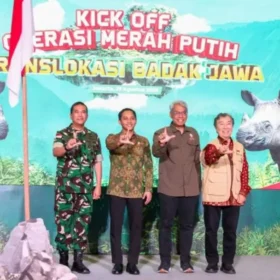
In addition to the biobank initiative, the government has also launched a translocation program to move several Javan rhinos to safer areas within Ujung Kulon National Park. This measure aims to minimize risks from natural disasters, such as potential eruptions from Mount Anak Krakatau, located nearby in the Sunda Strait.
“A male and a female Javan rhino are currently being relocated to the Javan Rhino Study and Conservation Area (JRSCA) in Ujungjaya Village, Pandeglang District,” Antoni confirmed.
The Indonesian Military is assisting in this delicate operation, ensuring the rhinos’ safety throughout the relocation process.
National Commitment to Protect the Javan Rhino
Minister Antoni underscored that preserving the Javan Rhino remains a national conservation priority for Indonesia. The government is combining scientific innovation, habitat protection, and military coordination to safeguard the species from extinction.
“Preserving the Javan rhino is a symbol of Indonesia’s commitment to biodiversity and environmental protection,” he stated.
A Race Against Extinction
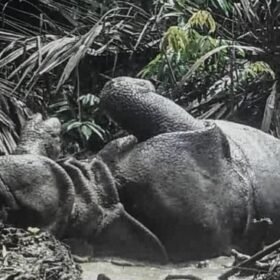
The Javan Rhino (Rhinoceros sondaicus) once roamed across Southeast Asia, but its population has drastically declined due to poaching, habitat loss, and natural disasters. Today, the species survives only in Ujung Kulon National Park, a UNESCO World Heritage Site that offers one of the last remaining strongholds for this ancient animal.
Through biobanking, IVF research, and continued habitat conservation, Indonesia hopes to secure the future of the Javan Rhino and serve as a global model for endangered species recovery.