First Time in History: The Translocation of the Javan Rhino with Support from the TNI Navy’s KAPA K-61 Marine Transport.
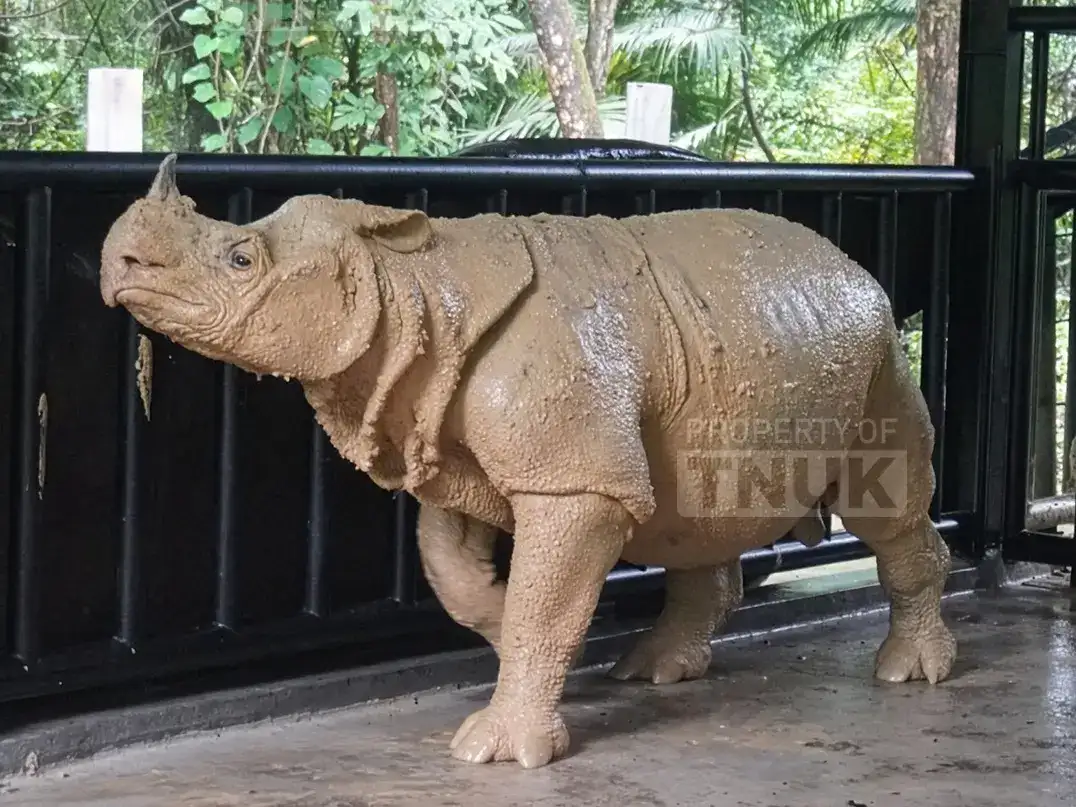
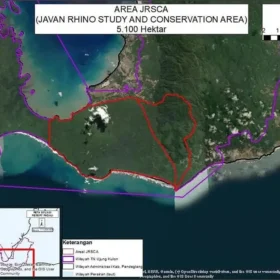
Indonesia’s conservation world has once again made history. For the first time, an individual Javan Rhino (Rhinoceros sondaicus) named Musofa was translocated from its natural habitat to the Javan Rhino Study and Conservation Area (JRSCA) within Ujung Kulon National Park (TNUK).

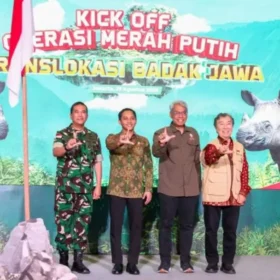
Operasi Merah Putih
This Javan Rhino translocation process, named “Operasi Merah Putih,” marks a monumental step in the effort to save one of Indonesia’s most critically endangered endemic species. The initiative was based on a Cooperation Agreement (PKS) between the Ministry of Forestry and the Indonesian National Armed Forces (TNI). In addition, it involved Kodam III Siliwangi, the TNI Naval Base in Banten, and the full support of the TNI Marine Corps’ Kapa 1 Battalion, which was crucial in this high-risk conservation mission.
Operation Merah Putih was led by the Commander of the Task Force, the Commander of the 064/Maulana Yusuf Banten Military Resort, Brigadier General Edy Saputra, S.I.P, M.Han, with the Deputy Commander of the Task Force, the Commander of the TNI Naval Base in Banten, Colonel of the Navy (P) Catur Yogiantoro, and Ardi Andono – the Head of the Ujung Kulon National Park Authority.
Preparations of Javan Rhino Translocation
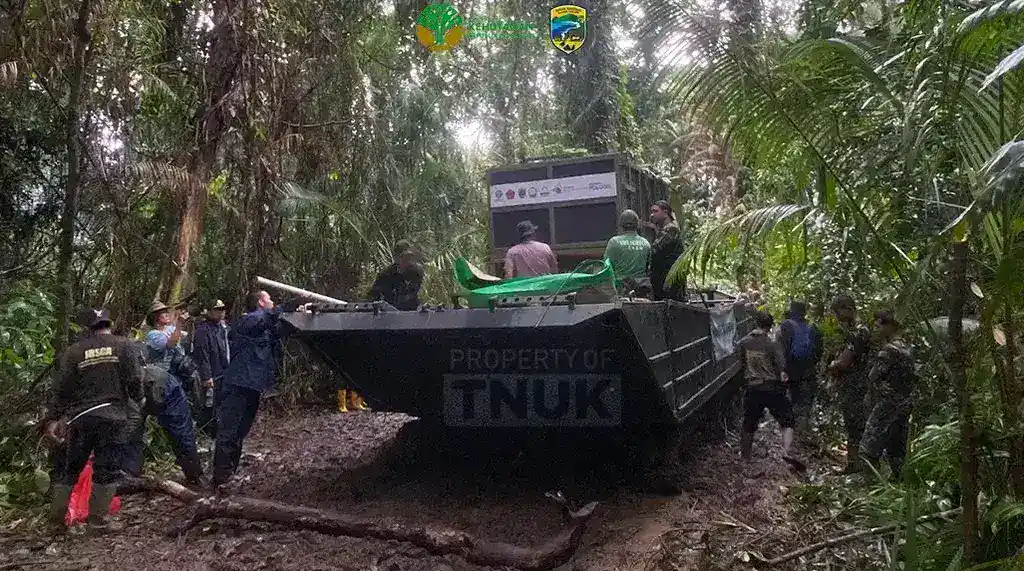
Before Operation Merah Putih was carried out in the field, a series of preparations were made to ensure that the entire team was fully ready. One of the most crucial steps was simulating the use of the KAPA K-61 amphibious vehicle of the TNI Marine Corps, which was designed to map out the challenges of the terrain when transporting the transport cage containing the Javan Rhino, which was estimated to weigh over one ton.
Moreover, on September 25, 2025, the Ministry of Forestry (Kemenhut), the Indonesian National Armed Forces (TNI), and the Indonesian Rhino Foundation (YABI) held a Tactical Floor Game (TFG) at the Manggala Wanabakti Auditorium in Jakarta. The TFG served as a strategic simulation to ensure that every role, evacuation route, contingency plan, and risk response was understood by the entire team. This phase became an essential foundation, enabling Operation Merah Putih to run effectively and coordinate towards the best possible results.
The Implementation of Operasi Merah Putih
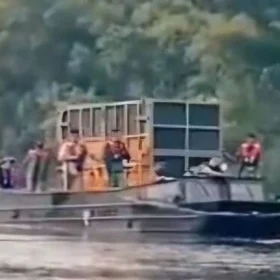
During the implementation of Operasi Merah Putih, a key factor for success was the use of the TNI’s KAPA K-61 amphibious vehicle, a large-capacity vehicle capable of navigating extreme routes in TNUK, particularly the waters. The vehicle’s range, stability, and durability ensured the safety, comfort, and minimal stress of the Javan Rhino during its journey.
The male rhino, Musofa, successfully entered the pit trap on November 3, 2025, after intensive monitoring, without injury or broken limbs. A preliminary health assessment, stress evaluation, and transfer preparations were then conducted according to protocol.
The transfer of Musofa began on November 4, 2025, at 04:00 WIB, when the team evacuated the rhino from the pit trap to a special transport cage. At this initial phase, all personnel moved carefully as the journey had to pass through narrow and slippery forest paths to reach the pickup point for the KAPA K-61 amphibious vehicle, led by the Commander of KAPA K-61 Battalion, Lieutenant Colonel of Marines Bayhaky C. Chipta, M. Tr,Opsla.
Arrival of Musofa
The next day, November 5, 2025, at 14:20 WIB, the KAPA K-61 amphibious vehicle began transporting Musofa’s cage over the sea route towards Legon Pakis, the nearest landing point that allowed further access to the JRSCA.
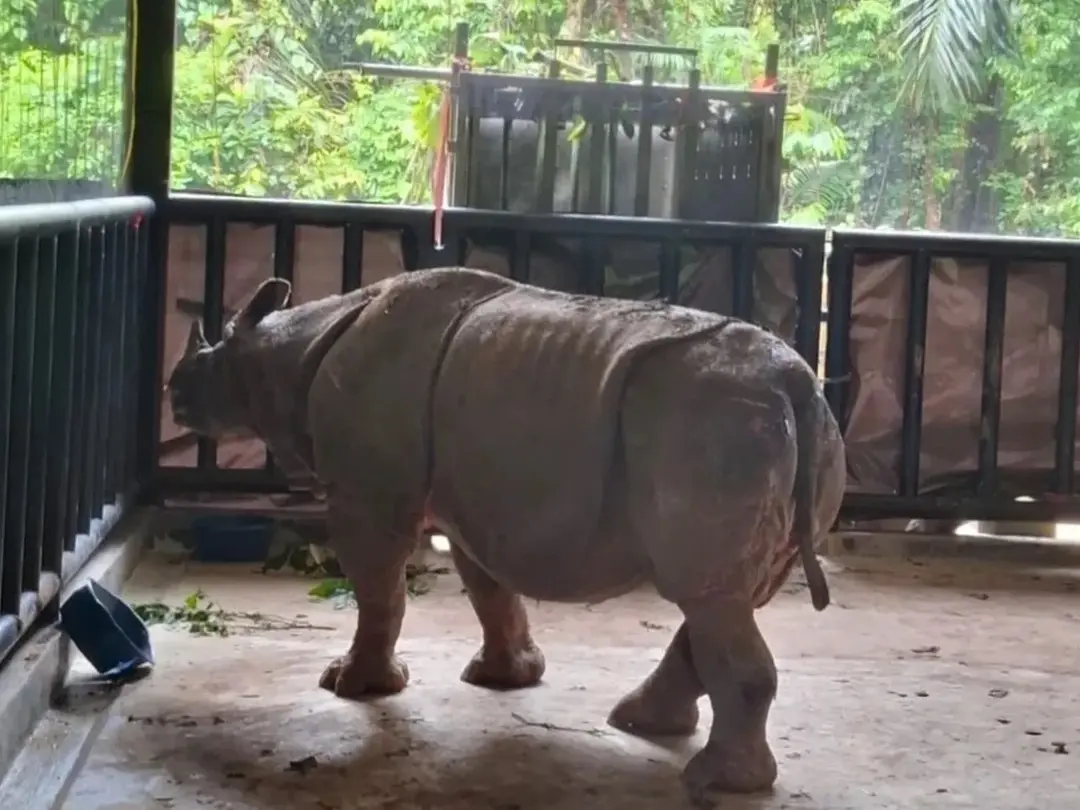
Upon arrival at the transfer point at 17:00 WIB, the team quickly continued the process of moving Musofa’s cage to the final land route using a truck. All stages were carried out at a measured pace, while prioritizing the safety and comfort of the Javan Rhino.
Finally, at 18:20 WIB, Musofa arrived at the JRSCA, where it was placed in a care enclosure (paddock), marking the successful completion of the transport phase and the start of the adaptation phase, which will be followed by medical observation and care by the veterinary team and keepers.
The successful operation of the KAPA K-61 demonstrates high operational standards, the professionalism of the TNI Marine Corps, and Indonesia’s preparedness to carry out complex conservation missions. The translocation of the Javan Rhino, Musofa, proves that careful planning, scientific collaboration, and strategic cross-sectoral support can bring new hope for the Javan Rhino, which now only exists in Ujung Kulon National Park, Indonesia.