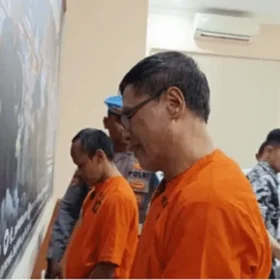
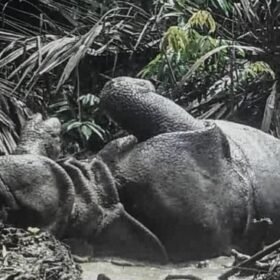
Liem Hoo Kwan Willy, who was previously acquitted in connection with the illegal trade of Javan rhino horns, has now been sentenced to one year in prison by the Supreme Court of Indonesia. The verdict overturns the Pandeglang District Court’s earlier ruling, which had found him not guilty due to insufficient evidence.

Liem Hoo Kwan Proven to be Involved
Liem Hoo Kwan was found to have been involved—directly and indirectly—in six transactions involving Javan rhino horns between 2020 and 2022. These transactions were linked to the poaching of at least six rhinos in Ujung Kulon National Park, the last remaining habitat of the critically endangered species.
In addition to the prison term, the Supreme Court imposed a fine of IDR 100 million, with a subsidiary sentence of three months if the fine is not paid. The decision was welcomed by conservation officials, who emphasized its significance as a warning against illegal wildlife trade.
While two lower court judges had previously viewed Willy’s role as merely a translator between the horn sellers and a Chinese buyer, the Supreme Court accepted the prosecution’s argument that Willy had actively facilitated the transactions and profited from the illegal trade.
Environmental groups and conservationists, however, believe that the sentence is still too lenient, especially when compared to harsher penalties handed to poachers. They urge authorities to pursue higher-level players in the international wildlife trafficking network that threatens the survival of the Javan rhino.
“This Supreme Court decision is also an important signal that Indonesian law does not tolerate the illegal trade of parts from endangered species,” said Satyawan on Sunday (April 27, 2025).
One-Year Sentence Called Unfair
Riszki Is Hardianto, a species researcher from the Auriga Nusantara Foundation, considered the one-year prison sentence and IDR 100 million fine (with a 3-month subsidiary sentence) handed to Willy to be somewhat unjust. He noted that Liem Hoo Kwan’s punishment is significantly lighter than those given to the poachers in the field, despite Liem Hoo Kwan’s considerable role in the wildlife crime.
He expressed hope that the case would not stop at Liem Hoo Kwan. Law enforcement and other relevant authorities are expected to continue uncovering and pursuing other individuals in the international network involved in the Javan rhino horn trade.
“If action is limited only to the actors at the technical level, poaching will continue because market demand will always exist. So it’s important to trace this trade all the way to its international links,” said Riszki on Monday (April 28, 2025).
Interpol Needed to Pursue Overseas Actors
Head of Ujung Kulon National Park (TNUK), Ardi Andono, stated that uncovering other actors above Willy—especially those overseas—in the rhino horn trade would require Interpol’s involvement, which falls under the jurisdiction of the police. For now, he hopes Willy can be promptly brought to justice.
Case Background
In a press release, the Ministry of Forestry explained that the case began with illegal trade in Javan rhino horns from poaching in the TNUK area, the last habitat of the species. Liem Hoo Kwan was arrested by Banten Police after strong suspicions of his involvement in purchasing horns from poached rhinos. However, in the first-instance trial at the Pandeglang District Court, Liem Hoo Kwan was acquitted due to insufficient evidence to support the charges.
The acquittal was challenged by the Public Prosecutor of the Pandeglang District Attorney’s Office through a cassation appeal to the Supreme Court. During the cassation process, prosecutors succeeded in convincing the Supreme Court judges that the evidence presented was sufficient to prove Willy’s involvement in the illegal trade.
Prior Convictions in Related Cases
Regarding Javan rhino poaching in TNUK, on June 5, 2024, the Pandeglang District Court found Sunendi guilty and sentenced him to 12 years in prison and a fine of IDR 100 million (subsidiary 2 months).
Later, on February 12, 2025, six other perpetrators—Sahru and his accomplices—were convicted for the same crime. Sahru received a 12-year sentence, while the other five were sentenced to 11 years each, along with fines of IDR 100 million (subsidiary 3 months) and court fees of IDR 5,000.
Additionally, on July 25, 2024, the Pandeglang District Court sentenced Yogi Purwadi, who acted as the middleman in the rhino horn trade, to 4 years and 6 months in prison and a fine of IDR 100 million (subsidiary 3 months).
According to the prosecutor’s indictment, Liem Hoo Kwan had been involved multiple times—either directly, indirectly, or in aiding—in trading, storing, or possessing skins, bodies, or other parts of protected animals in connection with the buying and selling of rhino horns.
Between April 2020 and December 2022, there were six transactions involving the sale of Javan rhino horns from Suhendi to Willy, facilitated through Yogi Purwadi and a man named Erik. In each transaction, one horn was sold. In total, Sunendi received IDR 1,575,000,000 from Liem Hoo Kwan.
Dissenting Opinions in Initial Verdict
Earlier, in the Pandeglang District Court ruling, Liem Hoo Kwan was acquitted on the grounds that he was not involved in the horn sale transactions. However, the presiding judge, Ageng Priambodo, dissented from the two other panel judges, Pandji Answinartha and Madela Natalia Sai Reeve.
According to Mongabay, the two judges believed that Willy’s role was only that of a translator. Pandji stated that the sale, carried out by Yogi Purwadi—already sentenced to 4.6 years—and a Chinese citizen named Chen Zhe Hui (aka Ai), had no connection to Liem Hoo Kwan.
The communications since 2021, Pandji argued, were simply friendly assistance in translating, as Ai had rented a room at Liem Hoo Kwan’s house. Pandji asserted that Willy merely relayed conversations and only knew that the item being discussed was a horn.
“The defendant was also proven to have not gained any profit from the transaction,” he added.
In contrast, Ageng believed that Liem Hoo Kwan was legally proven to be involved, categorizing his role as facilitating the transaction between Yogi and Ai. Although there was no evidence that Willy received any profit, Ageng highlighted several incriminating facts.
According to Sunendi’s testimony, six rhinos were killed and their horns harvested. Yogi searched for buyers by communicating with Willy, who handled negotiations and pricing with Ai.
Additional facts included a bank account under Willy’s name being used for a transfer to Yogi, and multiple transactions occurring at Willy’s house. Conversations also revealed details about the weight, condition, photos, and prices of the horns.
“Liem Hoo Kwan clearly knew they were discussing horns, especially given the hundreds of millions involved with no receipts,” said Ageng.
However, because Ageng was outvoted by the two other judges, the final decision at the district court level was to acquit Liem Hoo Kwan.
Source: Betahita