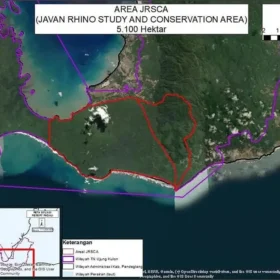
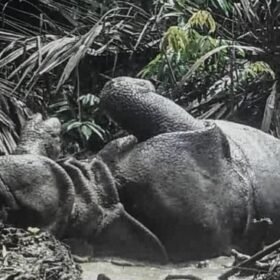
BTNUK (The Ujung Kulon National Park Authority) is developing a pair of Javan rhinos through a captive breeding program at the Javan Rhino Study and Conservation Area (JRSCA) to help preserve this critically endangered species.

“In this captive breeding program, there will be one female and one male rhino, so they can produce offspring with strong Deoxyribonucleic Acid (DNA),” said Ardi Andono, Head of BTNUK, in a statement in Pandeglang on Saturday.
According to him, the goal of breeding a male and female in captivity is to produce calves that can later be reintroduced into the wild.
Producing calves with strong DNA will help ensure that the Javan rhino population improves and remains healthy.
From 2020 to 2025, 24 rhino calves have been discovered in the wild, showing a positive growth trend in the population structure.
This effort is one of the strategies to conserve the Javan rhino population, whose numbers continue to decline.
“Hopefully, with this effort, our rhino numbers will continue to be preserved. Currently, there are about 87 to 100 individuals left,” he said.
Ardi added that developing the Javan rhino through the JRSCA captive breeding program is also expected to attract public interest, which could boost economic activities in the national park and surrounding communities.
The breeding program aims to improve the DNA structure of the existing rhino population while also drawing tourists to visit Pandeglang.
However, he noted that transferring the rhinos to the JRSCA captive breeding area will not be an easy task.
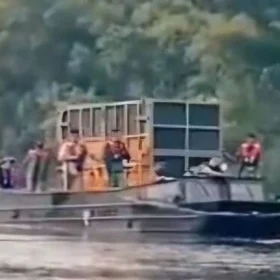
Therefore, his team will coordinate with the Indonesian National Armed Forces Headquarters (Mabes TNI) to carry out the relocation process.
“We are currently conducting a relocation simulation. The rhinos will later be captured using V-traps with assistance from Mabes TNI. Once the simulation runs smoothly, we will carry out the actual capture. The operation is expected to take place around April,” he said.
Meanwhile, Pandeglang Regent Raden Dewi Setiani expressed her support for the development of the Javan rhino through the JRSCA captive breeding effort.
She believes that the rhino breeding program presents a significant opportunity to build the local economic ecosystem.
“I will participate in the activities later. Hopefully, this can create new business opportunities for residents and broaden public awareness that this rhino is a heritage that must be preserved,” Dewi said.