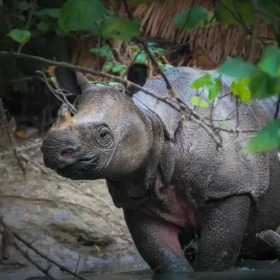
The Ministry of Forestry is making preparations to translocate Javan rhinos (*Rhinoceros sondaicus*) from Ujung Kulon National Park (TNUK) as part of a broader initiative to establish a second population of this critically endangered species by 2029.
“This endeavor is not simply a relocation of rhinos; it represents a collective effort to safeguard the future of a species on the brink of extinction. The collaboration between the government, academic institutions, conservation organizations, and local communities is essential,” remarked Sulaiman Umar Siddiq, Deputy Minister of Forestry, on Friday.
The Ministry of Forestry
The ministry of forestry intends to bolster Javan rhino conservation efforts through a translocation program, relocating the rhinos from TNUK to the Javan Rhino Study and Conservation Area (JRSCA).
The translocation of Javan rhino will involve moving the rhinos from their natural habitat in the Ujung Kulon Peninsula to the JRSCA, situated in Ujungjaya Village, Pandeglang District. Both locations are within the TNUK area, approximately 14 kilometers apart by sea.
This initiative is part of a national priority strategy aimed at mitigating the threat of extinction for the species, which is currently confined to a single habitat, Siddiq explained.
The decision to proceed with the translocation was informed by scientific studies indicating that the Javan rhino faces significant risks due to its restricted habitat, low genetic diversity, and an inbreeding rate of 58.5 percent.
A Population Viability Analysis (PVA) conducted by the ministry further predicts that the species could face extinction within 50 years without substantial intervention.
Siddiq emphasized that the translocation’s primary objectives are to establish a second viable population, enhance genetic diversity, and ensure the species’ long-term survival. This will be achieved through modern, technology-driven management practices, including Assisted Reproductive Technology (ART) and biobanking.
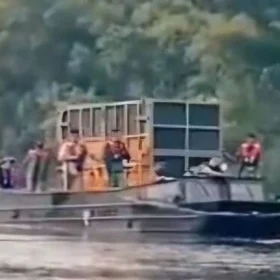
In May, the Ministry’s Directorate General of Natural Resources and Ecosystem Conservation (KSDAE) conducted a simulation to assess the feasibility of using amphibious vehicles for the translocation of the Javan rhinos. The simulation, carried out by the 1st Marine Artillery Transport Amphibious Vehicle Battalion (Yonkapa) on the Kapa K-61 Combat Vehicle, took place in Jakarta on May 28 to evaluate the ability to transport the rhino cages across the sea.
The Indonesian Ministry of Forestry is preparing to translocate several Javan rhinos (Rhinoceros sondaicus) to the Javan Rhino Study and Conservation Area (JRSCA) as part of a breeding program designed to enhance genetic diversity within the population.
In a statement issued in Jakarta on Thursday, the ministry’s Director General of Natural Resources and Ecosystem Conservation, Satyawan Pudyatmoko, explained that the initiative aims to address concerns about declining genetic variation among Javan rhinos in the wild.
“There are indications that genetic diversity among the Javan rhino population is decreasing. Therefore, relocating some rhinos to the JRSCA could help prevent inbreeding and strengthen the genetic resilience of the population,” Pudyatmoko stated.
He confirmed that the Ministry of Forestry would carry out the translocation plan in collaboration with the Indonesian Navy (TNI-AL), the Indonesian Rhinoceros Foundation (YABI), and other key partners.
Pudyatmoko provided further details, noting that several rhinos would be moved approximately 14 kilometers from the Ujung Kulon Peninsula—both located within the Ujung Kulon National Park in Banten Province—to the JRSCA using TNI-AL tactical vehicles via sea routes.
As part of the preparation process, the TNI-AL Marine Corps conducted a simulation on May 28 in Jakarta to assess the viability of using Kapa K-61 amphibious battle vehicles for transporting the Javan rhinos.
“This simulation is essential to ensure that the translocation process is carried out safely with minimal risks, especially given the long distance involved,” Pudyatmoko remarked.
He underscored the Marine Corps’ participation in the project as a key example of successful cross-sector collaboration in wildlife conservation.
Major Bayhaky C. Chipta, Commander of the Marine Corps’ Artillery Transport Amphibious Vehicle Battalion (Yonkapa) 1, emphasized that the mission is also a demonstration of the TNI-AL’s readiness to assist in wildlife rescue operations during natural disasters.
He explained that the Kapa K-61 amphibious vehicles were tested for their safety, stability, and efficiency in transporting the javan rhinos. The simulation involved a specially designed cage weighing approximately one ton, which was equipped with ventilation and shock-absorption buffers to ensure adequate oxygen supply and reduce potential jarring during transit.
Chipta concluded that the simulation confirmed the amphibious vehicles meet the required standards to safely translocate Javan rhinos, thereby supporting efforts to improve the species’ long-term survival prospects.